Tree Cabling & Bracing
Advanced Structural Support Systems to Preserve High-Value Split Trees
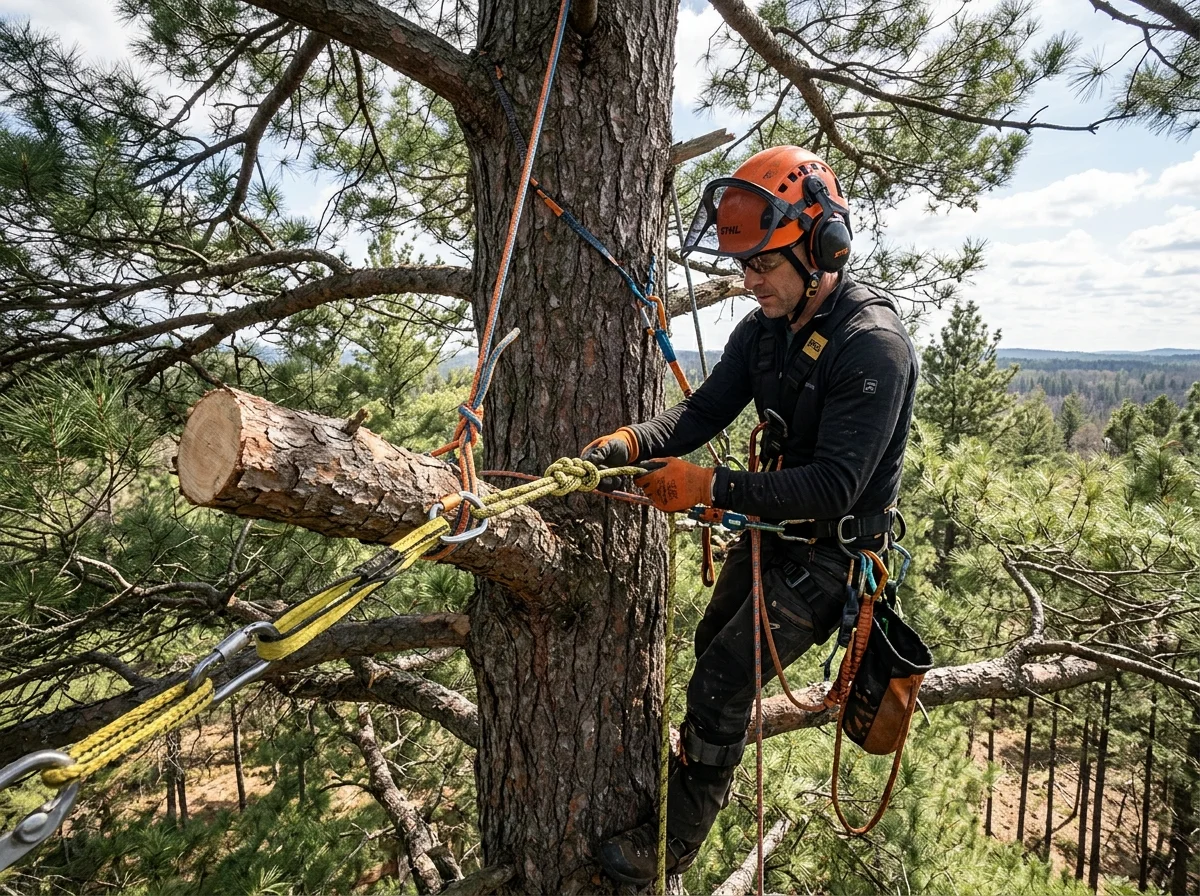
Mature, high-value shade trees frequently develop severe structural defects, such as deep V-shaped co-dominant trunks, heavy over-extended lateral limbs, or internal trunk splits. Replacing a 50-year-old historic Oak tree can diminish property value significantly. Professional tree cabling and bracing systems install flexible, high-tensile steel cables in the upper canopy to redistribute dynamic wind loads, preserving magnificent historic trees and preventing catastrophic storm splits.
How Structural Cabling & Bracing Preserves Mature Trees
Co-dominant trunks grow parallel to each other with trapped bark inside the V-shaped union, creating a weak mechanical joint highly susceptible to splitting open during ice storms or high wind downbursts. Installing extra-high-strength (EHS) galvanized steel cables approximately two-thirds of the height up the canopy creates a supportive bridge. When high winds hit, the cable transfers dynamic stress across both trunks, dramatically reducing movement at the weak split union.
When to Install Tree Structural Cabling Systems
- Co-Dominant Trunks with Deep V-Crotch Splits: Main trunks dividing into two equal leaders with visible crack lines.
- Heavy Over-Extended Scaffold Branches: Large lateral limbs extending horizontally over roofs, patios, or driveways.
- Historical & High-Value Shade Trees: Preserving irreplaceable mature trees that add significant aesthetic and monetary value.
- Post-Storm Stress Recovery: Supporting trees that suffered minor limb loss during recent severe weather.
Arborist Hardware Installation & Tensioning Workflow
Tree cabling is a precise engineering installation performed by certified arborists:
Structural Load Calculation
Arborists analyze canopy weight distribution, wind exposure, and split severity to determine exact cable placement height.
Forged Industrial Hardware Anchor
Heavy-duty drop-forged eye bolts or threaded steel rods are installed directly through the sound wood of target trunks.
EHS Steel Cable Tensioning
Extra-High-Strength galvanized steel cable is attached using dead-end grips and tensioned to absorb wind loads.
Periodic Inspection & Growth Tuning
Arborists perform periodic reviews to inspect cable tension and hardware integrity as the tree continues natural growth.
Frequently Asked Questions About Tree Cabling & Bracing
Does installing cabling hardware hurt the tree?
No. Arborists drill clean holes through sound wood for forged eye bolts. The tree quickly compartmentalizes the small hole around the hardware without decay.
How long do tree cabling systems last?
High-quality EHS galvanized steel cabling systems last 20 to 40 years, though periodic arborist inspections every 3-5 years are recommended.
Can cabling fix a tree that has already split?
If the split is caught early and the tree is otherwise healthy, combining threaded steel bracing rods through the split with upper cables can successfully stabilize and save the tree.