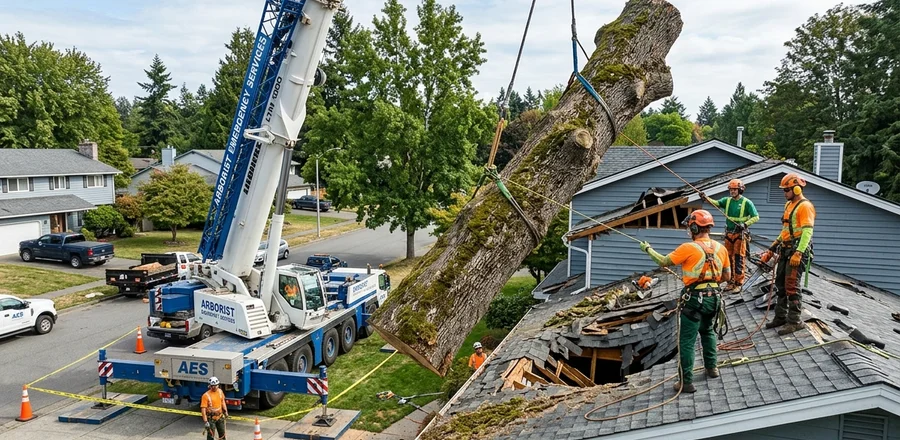
When a multi-ton Oak, Pine, or Maple tree collapses onto a residential structure during a severe weather event, standard ground-based chainsaw dismantling is impossible and dangerous. Heavy 100-ton all-terrain cranes are required to pick massive log sections vertically off crushed roofs. Understanding emergency crane pricing factors helps property owners navigate insurance reimbursement and emergency expenses.
1. Average Emergency Crane Removal Cost Breakdown
Pricing for emergency crane tree extraction varies based on job complexity and equipment capacity:
- Standard Crane Removal (Unstruck Hazard Near House): $1,800 – $3,500
- Complex Structural Roof Crane Extraction: $3,500 – $7,500+
- Overnight / Storm Surge Emergency Dispatch: $4,500 – $9,000+
- Commercial Emergency Roof Tarping: $400 – $1,200 (usually covered by insurance)
2. Key Equipment & Labor Pricing Factors
Crane Capacity & Mobilization Permits
Operating a 100-ton or 150-ton all-terrain crane requires heavy transport permits, counterweight trucks, certified crane operators, and rigger support personnel.
Structural Hazard & Tension Rigging
Trees resting on crushed roof rafters exert dynamic tension. Arborist riggers must climb into the canopy to attach synthetic slings and calculate exact section weight limits before making relief cuts.
Reach Distance & Driveway Access
If a crane must set up in a front driveway to hoist heavy logs over a two-story house from the backyard, a larger 120ft+ boom crane is required, increasing hourly equipment rates.
Debris Hauling & Stump Grinding
Processing massive log sections through 18-inch industrial chippers or loading heavy timber onto articulating grapple trucks adds standard hauling labor costs.
3. Will Insurance Cover Emergency Crane Tree Removal?
Yes, in almost all structural impact cases. If a fallen tree strikes a covered dwelling, garage, shed, or fence, homeowners insurance policies cover reasonable crane rigging and extraction fees under the policy's structural loss mitigation clause. Emergency arborist crews submit itemized invoices directly to your claims adjuster.