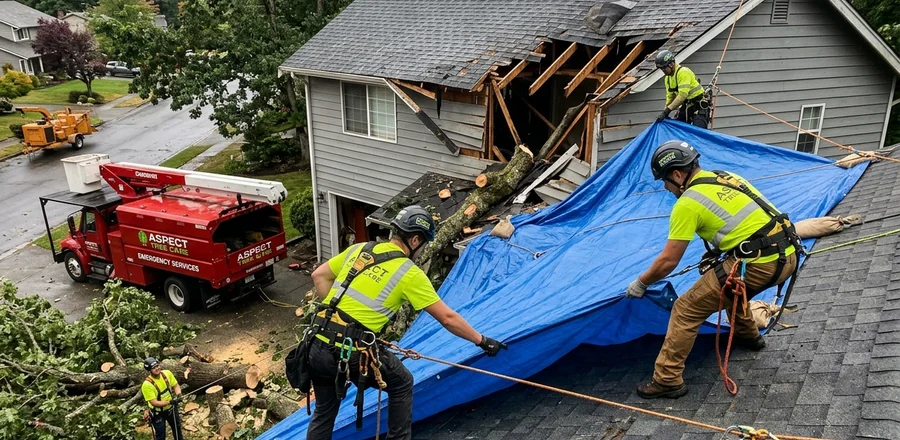
A multi-ton tree crashing through a residential roof is one of the most destructive and chaotic emergencies a property owner can experience. Beyond the immediate shock, navigating the insurance claim process for heavy crane extraction, emergency roof tarping, and structural timber repairs requires precise documentation to ensure your insurance carrier reimburses 100% of eligible loss expenses.
Virtually all standard HO-3 homeowners insurance policies contain a mandatory clause requiring policyholders to immediately secure exposed structures to prevent secondary water damage. Hiring an emergency tree crew to perform crane extractions and install heavy-duty roof tarps is fully covered under this policy requirement.
1. What Homeowners Insurance Covers After a Tree Impact
Standard homeowners insurance policies (HO-3 and HO-5 coverage) provide comprehensive coverage for tree-related storm disasters, including:
- Structural Home Repairs: Full coverage to repair or rebuild damaged roof trusses, decking, shingles, gutters, siding, drywall, and interior framing.
- Emergency Tree Extraction (Heavy Crane & Rigging): Full coverage for specialized crane machinery required to lift heavy log sections off structural roofs safely.
- Emergency Weatherproof Roof Tarping: Full coverage for heavy commercial tarps installed immediately over roof punctures to prevent rain intrusion.
- Debris Removal Allowance: Standard policies include $500 to $1,000 per tree (or up to 5% of total dwelling limits) for hauling away tree debris after extraction.
- Additional Living Expenses (ALE): If structural damage renders your home unsafe to inhabit, ALE coverage pays for temporary hotel accommodations and meals.
2. Exhaustive Step-by-Step Insurance Claim Workflow
Perform Immediate Safety Assessment
Evacuate rooms directly beneath structural roof impacts. If power lines or gas lines are damaged, shut off main utility breakers outside if safe, and call emergency services.
Take Detailed High-Resolution Photo Evidence
Photograph the fallen tree resting on the roof, the failure point (uprooted root ball or trunk shear), crushed rafters, ceiling water leaks, and damaged property contents from multiple perspectives.
Contact 24/7 Emergency Dispatch Immediately
Call a specialized emergency tree service that provides itemized adjuster billing and written cause-of-loss reports detailing severe storm wind speeds or ice weight.
Authorize Emergency Roof Tarping
Crews install heavy-duty, UV-resistant commercial tarps over exposed roof punctures to seal out rain, preventing secondary water and mold damage that insurance adjusters could dispute.
File the Official Claim & Meet the Adjuster
Submit your photo logs, tree removal contractor invoices, and arborist statements to your insurance adjuster during their on-site inspection.
3. How Emergency Crews Assist with Adjuster Approvals
Specialized emergency tree services understand Xactimate insurance pricing standards. Professional crews support your claim by providing:
- Itemized Billing Breakdown: Clearly separating heavy crane equipment rates from standard ground chipping and hauling.
- Arborist Cause of Loss Certification: Written statement attributing tree failure directly to severe weather downbursts, microbursts, or extreme ice loading.
- Step-by-Step Rigging Photo Verification: Photos capturing synthetic sling attachments, crane hoists, and final roof clearance to prove necessity.
Insurance adjusters may reject claims or hold homeowners liable for secondary roof collapse if untrained property owners attempt to cut tensioned trees with chainsaws before professional crews arrive. Always allow licensed crane operators to stabilize structural hazards.