Hearing the deafening crack of a multi-ton oak, pine, or maple crashing through your roof is one of the most terrifying experiences a homeowner can face. In the chaotic minutes immediately following impact, panic often leads to dangerous mistakes—such as climbing onto a live-wire roof, cutting tensioned limbs with a chainsaw, or waiting days for an insurance adjuster while rain ruins the interior. Follow this hour-by-hour emergency triage protocol to protect your family, preserve insurance coverage, and stabilize your home.
Hour 0 (First 15 Minutes): Life Safety & Structural Assessment
Evacuate All Rooms Directly Beneath the Impact Zone
Trees resting on roof rafters exert massive dynamic downward loads. A tree that appears stable can suddenly shift hours later as wind blows or cracked rafters give way. Move all family members and pets to the opposite end of the home or outdoors.
Smell for Natural Gas & Check Main Utilities
Fallen trees frequently snap gas meter lines or crush underground service lines. If you detect sulfur or rotten egg odor, evacuate the house immediately and dial 911 from a safe distance across the street.
Shut Off Electrical Breakers If Water is Leaking
If rain is pouring through ceiling fixtures, turn off the main electrical breaker panel—provided the panel is in a completely dry area. If the panel room is wet or you hear buzzing, do NOT touch it; call the power company.
Hour 1: The Electrical & Utility Wire Protocol
Before any contractor sets foot on your property, you must determine whether overhead electrical wires are compromised:
- High-Voltage Primary Distribution Lines (Street to Pole): If a tree is touching or within 10 feet of high-voltage street lines, STOP. Private tree services are legally prohibited under OSHA 1910.269 from touching the tree until the electric utility isolates and grounds the line. Call your electric utility's 24/7 wire emergency hotline. The utility clears lines for free.
- Private Service Drop (Pole to Weatherhead on Roof): If the line running from the pole to your house is down, the power company will disconnect the meter for safety, but private ISA-certified tree crews can perform the tree removal once power is cut.
Hour 2: The 20-Photo Claim Documentation Checklist
Before a single branch is severed or moved by a tree crew, you must create an ironclad digital photographic record. Insurance adjusters are trained to scrutinize storm claims for pre-existing decay. Capture these 5 critical photo angles:
- 1. Wide-Angle Context Shots (4 Photos): Step back to the street and yard. Show the full tree, the entire house, and adjacent neighboring structures to establish storm context.
- 2. Point of Roof Impact & Penetration (5 Photos): Photograph where the trunk or major limbs pierced shingles, crushed rafters, or penetrated ceilings from both exterior and interior angles.
- 3. The Root Ball / Base of Trunk (4 Photos): Crucial! Photograph the severed stump or uprooted root plate. Proving the interior heartwood was solid and green refutes insurer claims of "pre-existing rot neglect".
- 4. Healthy Green Foliage & Canopy (3 Photos): Document that the tree had living green leaves or healthy needles before the storm, proving it was a living specimen felled by extreme winds.
- 5. Surrounding Storm Evidence (4 Photos): Photograph downed fences, neighbor debris, or hail accumulation to verify severe weather downbursts.
Hour 3: Dispatching Vetted 24/7 Emergency Arborists
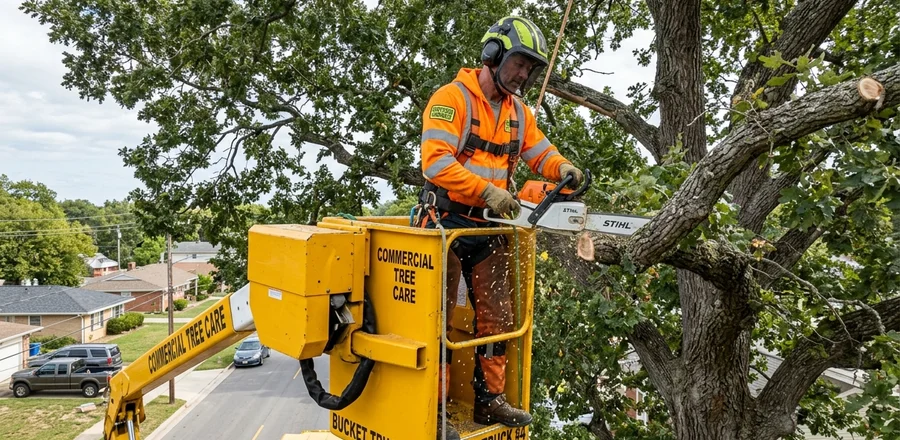
Now that photos are secured and wires are assessed, dispatch a professional crane-equipped emergency tree removal crew. When calling dispatch operators, verify the following:
- Commercial General Liability: Minimum $1,000,000 to $2,000,000 active policy.
- Mandatory Workers' Compensation: Crucial! Tree removal is among the top 5 deadliest occupations in America. If an uninsured tree climber falls off your roof, your homeowners policy becomes liable for their catastrophic medical expenses.
- Crane & Tarping Capability: Ensure the crew can deploy a crane to pick the tree vertically off the roof and immediately install commercial roof tarps (dry-in).
Day 1–2: Filing the Insurance Notice of Loss & Adjuster Meeting
Call your insurance company's claims line to formally report the loss and obtain a Claim Number. Inform the representative:
- You have completed emergency hazard mitigation (tree extraction & roof tarping) under your policy's Duty to Mitigate clause.
- You have comprehensive timestamped photo logs and an itemized arborist invoice separating structural extraction from debris removal.
- Request an on-site field adjuster inspection to assess structural rafter damage, attic insulation saturation, and ceiling drywall repairs.
If you are facing an active tree emergency right now, call (855) 580-0754 for immediate connection with licensed, insured emergency arborist crews in your area.