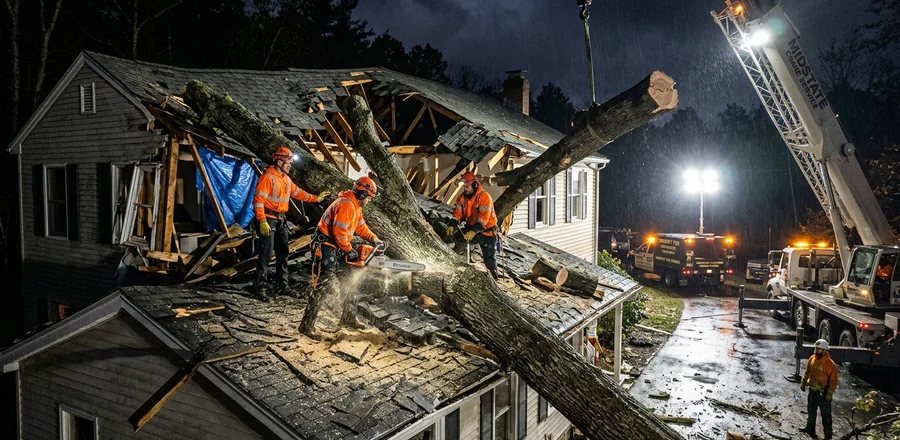
Over 70% of emergency tree removal dispatches during severe thunderstorms, winter freeze events, and high-wind squalls involve pre-existing rot or structural defects that went unnoticed by property owners. Identifying early warning signs allows homeowners to schedule controlled tree removal before a catastrophic roof collapse occurs.
The 5 Critical Warning Signs of Impending Tree Failure
Fungal Bracket Conks & Mushrooms on the Trunk
Shelf-like bracket mushrooms or conks sprouting from the main trunk or root flare indicate advanced decay of internal structural cellulose, leaving the heartwood soft and spongy.
Deep Trunk Cavities & Hollow Cores
Large open hollows or decay pockets where old branches broke off allow rainwater to pool inside the trunk. A tree with more than 30% hollow trunk volume is at extreme risk of snapping in 40+ mph wind gusts.
Heaving Soil & Uprooted Root Plates
Cracked, mounded, or lifted soil on one side of the tree base signals structural root shear. If you notice soil lifting after heavy rain, the root plate is failing and unanchoring from the ground.
Sudden Leaning or Increasing Tilt
While trees often grow with a natural slight lean toward sunlight, a tree that suddenly develops a sharp lean after heavy saturated rainfall indicates imminent root failure.
Deadwood Canopy Dieback & Bark Sheeting
Large dead limbs in the upper canopy ("stagheading"), peeling bark sheeting off the trunk without regrowth, and deep vertical heartwood cracks indicate advanced decay.
What to Do if You Identify a Hazardous Tree
Do not attempt to fell a hazardous, rotting tree yourself. Schedule a hazard evaluation with an ISA Certified Arborist to discuss piece-by-piece sectional dismantling or heavy crane extraction before severe weather strikes.